

OpenArt vs MidJourney (2026): Which AI Art Tool is Better ?
Choosing between OpenArt AI and MidJourney can be challenging, especially if you are a blogger, marketer, or content creator looking for the best AI image generator in 2026. Both tools are powerful, but they serve different purposes. MidJourney is widely known for producing highly polished, cinematic visuals, while OpenArt focuses on flexibility, editing control, and ease of use. In this detailed comparison, we will analyze features, pricing, image quality, usability, and real-world use cases to help you choose the right tool for your needs.
What is the Difference Between OpenArt and MidJourney?
The core difference between OpenArt and MidJourney lies in how they generate and manage images. MidJourney operates on a closed, proprietary model that is optimized for artistic and visually striking outputs. It enhances prompts automatically with dramatic lighting and textures, making images look professional with minimal effort. OpenArt, on the other hand, functions as a multi-model platform. It allows users to access different AI engines such as Stable Diffusion and FLUX, offering more control and customization over the final output. This makes OpenArt more versatile for users who need precision rather than artistic interpretation.
MidJourney v6: Best for High-Quality Visuals
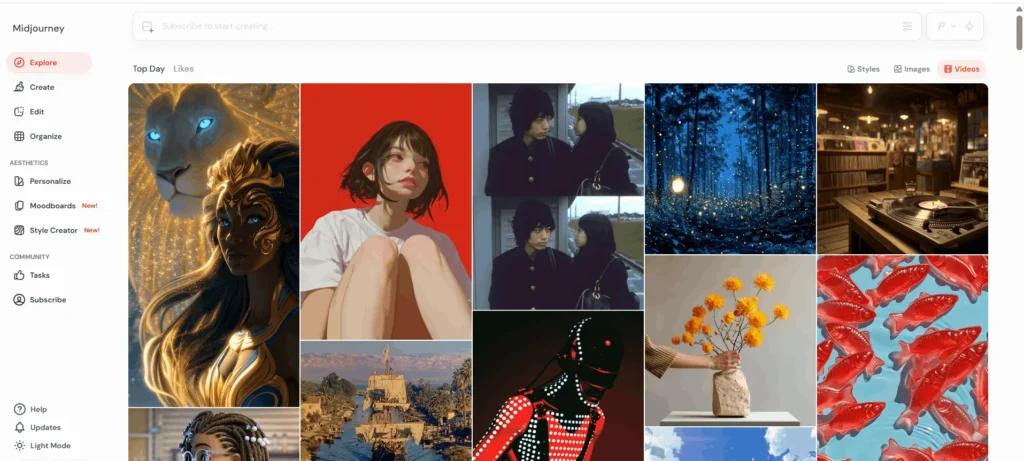
MidJourney v6 is considered one of the most advanced AI image generators when it comes to visual quality. It excels at producing cinematic images with rich textures, realistic lighting, and impressive detail. For bloggers and marketers who need eye-catching visuals for websites, ads, or social media, MidJourney delivers high-quality results with minimal prompt effort. However, its reliance on Discord can make the workflow less convenient, especially for users who prefer a traditional interface. Additionally, it offers limited editing capabilities, which can be a drawback for professionals who need more control after image generation.
OpenArt AI: Best for Control and Editing
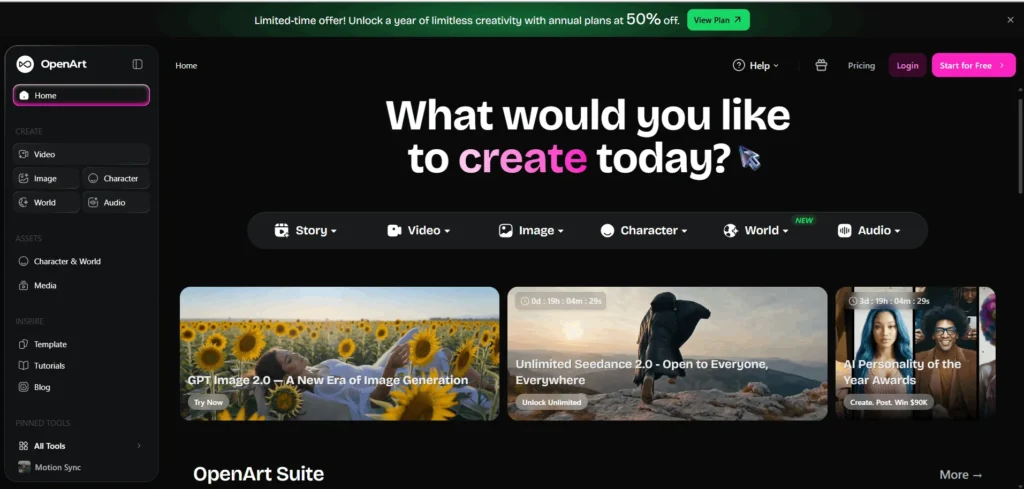
OpenArt AI stands out as a web-based platform designed for flexibility and ease of use. Unlike MidJourney, it provides a clean dashboard where users can manage projects, edit images, and experiment with different models. One of its biggest advantages is its built-in editing tools, such as inpainting and ControlNet, which allow users to modify specific parts of an image without regenerating the entire output. This makes OpenArt ideal for marketers, designers, and beginners who want more control over their visuals. The availability of free trial credits also makes it accessible for users who want to test the platform before committing to a subscription.
MidJourney vs OpenArt: Interface and Usability
The user experience is one of the biggest differences between these two tools. MidJourney primarily operates through Discord, where users must input commands and parameters to generate images. While this approach offers flexibility, it can feel complicated and unstructured for beginners. OpenArt simplifies the process with a web-based interface that uses visual controls such as sliders and buttons. Users can easily adjust settings like aspect ratio, style, and prompt strength without memorizing commands. This makes OpenArt significantly more beginner-friendly and efficient for daily use.
Prompting System Comparison
The way prompts are handled in each platform reflects their overall design philosophy. MidJourney relies heavily on command-based inputs, where users must include specific parameters to achieve desired results. This approach provides precise control but requires a learning curve. OpenArt simplifies prompting by combining text input with visual tools. Users can select styles, adjust parameters, and refine outputs using an intuitive interface. This reduces the chances of errors and speeds up the creative process, making it more suitable for non-technical users.
Image Quality and Styling Comparison
When it comes to image quality, MidJourney has a clear advantage in producing highly realistic and artistic visuals. It is particularly strong in generating human faces, complex lighting effects, and cinematic compositions. OpenArt’s output quality depends on the model selected by the user. While it can produce realistic images using advanced models, its default outputs may sometimes appear less refined compared to MidJourney. However, OpenArt compensates for this with greater control, allowing users to fine-tune images according to specific requirements.
Editing Features: Why OpenArt Has an Edge
Editing capabilities are where OpenArt significantly outperforms MidJourney. OpenArt includes advanced tools such as inpainting, which allows users to edit specific parts of an image, and ControlNet, which helps maintain consistency in structure and layout. These features are particularly useful for marketers and content creators who need precise adjustments without starting from scratch. MidJourney offers limited editing options, making it less suitable for workflows that require detailed modifications.
OpenArt vs MidJourney Pricing Comparison
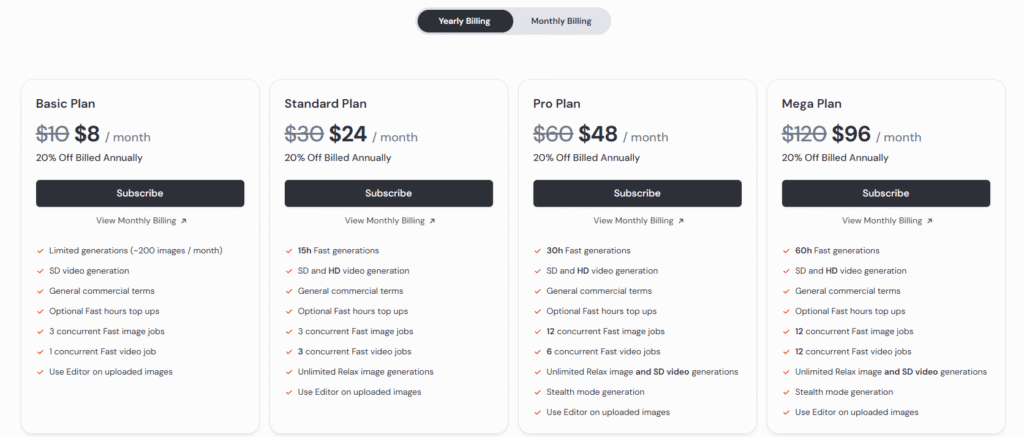
Pricing is another important factor when choosing between these tools. OpenArt offers a freemium model that includes free trial credits, allowing users to explore its features without an upfront investment. Its paid plans are competitively priced and provide access to advanced tools and commercial usage rights. MidJourney, however, does not offer a free plan and requires users to subscribe before generating images. While its pricing is comparable to OpenArt, the lack of a free trial can be a barrier for beginners.

| Feature / Plan | OpenArt AI | MidJourney |
|---|---|---|
| Free Plan | Yes (40 trial credits) | No |
| Starting Price | $14/month (Essential) | $10/month (Basic) |
| Mid Plan | $29/month (Advanced) | $30/month (Standard) |
| Pro Plan | $56/month (Infinite) | $60/month (Pro) |
| High-End Plan | $120+/month (Wonder) | $120/month (Mega) |
| Pricing Model | Credit-based system | GPU time-based system |
| Images per Month | Depends on credits (4K–100K+) | Depends on GPU hours |
| Unlimited Mode | Available in higher plans | Available (Relax Mode) |
| Free Trial Availability | Yes | No |
| Commercial Use | Yes (paid plans) | Yes (paid plans) |
| Best For | Flexible usage & editing workflows | High-quality image generation |
Commercial Use and Licensing
Both OpenArt and MidJourney allow users to use generated images for commercial purposes under their paid plans. This means you can use the images for blogs, advertisements, social media content, and other marketing materials. However, it is important to note that current copyright laws do not fully protect AI-generated images, which means exclusive ownership can be difficult to enforce.
Final Verdict: Which AI Tool Should You Choose?
Choosing between OpenArt and MidJourney ultimately depends on your workflow and priorities. If your goal is to create visually stunning, high-quality images with minimal effort, MidJourney is the better choice. Its ability to generate cinematic and realistic visuals makes it ideal for creative professionals. On the other hand, if you value control, editing capabilities, and ease of use, OpenArt is the more practical option. Its web-based interface and advanced tools make it especially suitable for beginners and marketers.
For many users, the best approach is to use both tools together. MidJourney can be used to generate high-quality base images, while OpenArt can refine and edit those images for specific use cases. This combination allows you to leverage the strengths of both platforms and create high-performing visual content.


1 thought on “OpenArt vs MidJourney (2026): Which AI Art Tool is Better ?”